A meeting venue can look convincing during a tour and still leave the planning team with unanswered questions. The room shown may use a different arrangement from the proposed session. The quiet corridor may be shared on the event date. A useful feature may depend on a service nobody has yet confirmed.
A hotel meeting venue site visit should turn those impressions into a usable field report. Its value lies in the answers brought back: what was observed, what the venue described, what reference supports the proposal and what remains to be resolved.
This guide follows seven answers worth organizing before and after the visit. It concerns operational planning, not technical certification, legal access requirements or contractual interpretation. The report example is hypothetical, and no property, service availability or inspection entitlement is implied.
Take an event question into the hotel meeting venue site visit
Begin the hotel meeting venue site visit with the event’s purpose and the decisions it needs to inform. A team comparing venues for a discussion-led workshop needs different evidence from one planning a presentation programme. A generic tour can be interesting while failing to answer either team’s operating questions.
An undated site-inspection form publicly hosted by Marriott separates meeting, visit and property details. That information structure remains useful for identifying what a report describes. The legacy form is not evidence of current prices, services, ratings or compliance at any venue.
Give the hotel meeting venue site visit a short brief: proposed event, relevant sessions, unresolved requirements and the people who need the answers. Share the appropriate questions with the venue contact through the organiser’s established process so the visit can address the actual decision.

Answer one: which event requirement does this observation inform?
Connect each useful note from the hotel meeting venue site visit to a requirement. A photograph of a room becomes more meaningful when the report explains which session and activity it relates to. A broad rating such as “excellent space” does not tell the absent colleague what was assessed.
Distinguish an established event need from a preference still under discussion. The venue should not be judged against a requirement that the planning team has not agreed. Record the question’s status so that a later decision does not appear to have been settled during the tour.
The hotel meeting venue site visit can reveal that the event brief itself needs clarification. Perhaps the team has not decided whether participants will remain in one room or move between sessions. Treat that as an organiser action, rather than asking the venue contact to guess the intended programme.
Answer two: which exact room and arrangement were reviewed?
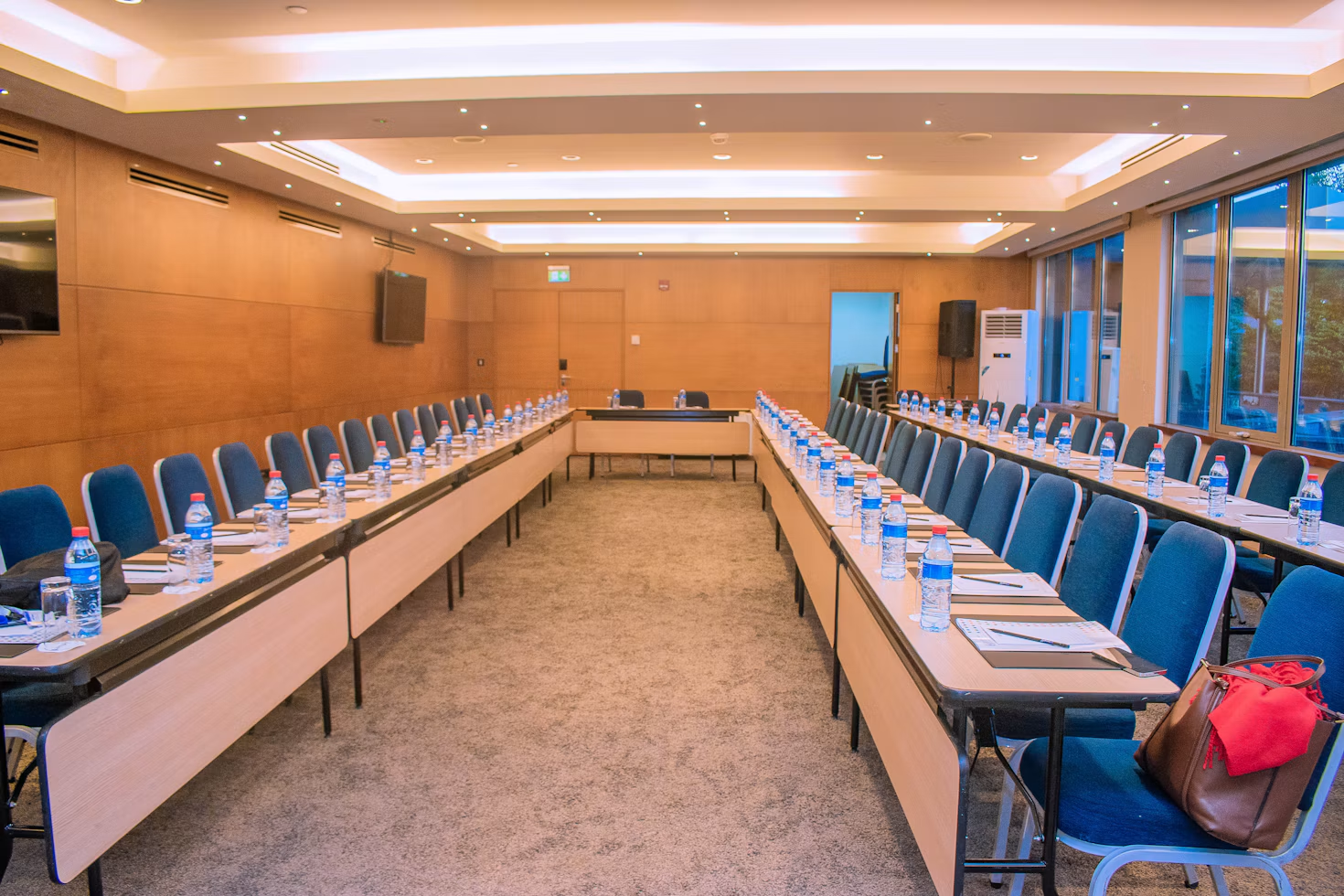
Identify the room shown, the proposed room and the arrangement being discussed. If these differ, explain the relationship. A demonstration setup can help a conversation without proving that the intended configuration has been reviewed for the proposed event.
Princeton University’s event-planning guidance describes room diagrams as shared references for teams discussing equipment, space needs and flow. Applied to a hotel visit, the useful principle is a common reference. An example diagram does not establish the suitability of another venue’s room.
Ask which current venue-provided reference the report should use. Keep its identifier and the context of the discussion. Do not infer a permitted capacity, technical assessment or final arrangement from a photograph, a room name or a diagram collected for another event.
Answer three: what access and changeover questions remain?
Consider the relationship between the programme and the room’s proposed use. A session start is different from the point at which the responsible team can access the room for its agreed work. The hotel meeting venue site visit should identify which timing assumptions need confirmation.
Ask how a proposed room change connects with the activities before and after it. Avoid inserting a standard turnaround allowance or assuming that a space shown empty will be available in the same way on the event date. Those details belong to the venue’s actual proposal.
In the report from the hotel meeting venue site visit, record the source and status of the answer. A venue contact may describe an intended arrangement while a related booking detail remains open. Keeping that distinction visible is more useful than copying a tentative statement into the report as a settled commitment.
Answer four: how will participants encounter the event?
Follow the intended participant journey at the level the visit permits: arrival information, the route described by the venue, registration and the relevant session spaces. Note the questions the journey creates rather than inventing instructions for access, traffic management or building operation.
If a route or feature cannot be assessed during the tour, say so. A hotel meeting venue site visit should distinguish an observed condition from an explanation received. The report is stronger when it preserves what was not seen than when it fills the gap with a confident impression.
Bring event-specific participant requirements to the responsible venue team for assessment. This guide does not define accessibility compliance or promise that a route is suitable. Its purpose is to ensure the relevant requirement has an identifiable question, supporting reference and follow-up owner.
Answer five: where do service responsibilities meet?
A meeting experience depends on handoffs among the organiser, venue and any participating suppliers. Identify who coordinates the room reference, session information, service requests and relevant provider communication. A feature described during a tour may involve a separate responsibility or unconfirmed scope.
For each important interface, ask who provides the next answer. The report does not need every team member’s private contact details; it needs an appropriate working route and role. An absent colleague should know where to take a question without reconstructing the tour conversation.
The hotel meeting venue site visit is also a chance to identify assumptions about ownership. If the organiser expects the venue to update session information while the venue expects an organiser-supplied reference, record the gap. Neither expectation should become an invented service commitment.

Answer six: what concurrent activity needs clarification?
A visit captures a particular moment. Ask which questions about other proposed activity are relevant to the event, such as shared foyers, adjacent sessions or changes in the use of connecting spaces. Do not assume the tour’s conditions describe the future event date.
A venue may not yet have a final answer. Record that status accurately and identify when the planning team needs an update through its agreed process. Avoid promising quietness, exclusivity or unrestricted use of a shared area without appropriate confirmation.
Where information could change the event decision, make it visible in the comparison rather than burying it in a narrative note. The important distinction is between an acceptable, understood arrangement and an unresolved assumption that the planning team has not considered.
Answer seven: who owns the unresolved questions?
The hotel meeting venue site visit report should end with bounded follow-up questions, not a general instruction to contact the venue. Name the required answer, its responsible role and the reference it affects. Use the organiser’s established planning process to manage timing and responses.
IACC’s voluntary recommended guidelines discuss meeting-room inspection responsibility, records and follow-up. Their relevant lesson is organized attention to conditions and ownership. They are not universal hotel rules or proof that a visited property meets a particular standard.
When an answer arrives, connect it to the original question. A response about room setup does not settle a separate query about a shared foyer. A hotel meeting venue site visit produces a useful record when later readers can trace each important conclusion to its evidence.
A field-report example: attractive room, incomplete comparison
Imagine a fictional planner visits a room presented in a discussion arrangement. The proposed programme includes a presentation followed by a different activity. The room looks promising, but the planner has not yet received the venue’s reference for the intended change between sessions.
The report records the observed arrangement and the proposed programme separately. It does not label the room unsuitable, nor does it claim that the change is confirmed. The outstanding question concerns the relationship between the intended arrangement and the programme.
Each entry is organised under Report item.
- Arrangement seen during visit
Evidence status: Observed at the tour
Follow-up: Identify the relevant room reference
- Proposed programme change
Evidence status: Described by the organiser
Follow-up: Confirm the intended activity sequence
- Venue changeover arrangement
Evidence status: Not yet established
Follow-up: Responsible venue role supplies the relevant answer
In this fictional hotel meeting venue site visit, an absent colleague can understand why the open question still matters. They can compare it with the event requirements and identify the person who must answer it. The record gives the planning team a clearer basis for continuing the decision than the original visitor’s enthusiasm or memory alone.
Compare hotel meeting venue site visit reports fairly
Use a common version of the event brief for each hotel meeting venue site visit when comparing properties. If the programme changes between visits, identify which earlier answers need to be revisited. Otherwise one venue may appear less suitable simply because it responded to a requirement that the organiser later changed.
Use separate columns for a confirmed response, an observation and information still awaited. A missing answer should not silently become a negative assessment, just as an appealing description should not become a confirmed service. The planning team can then decide which uncertainty matters to its decision.
Keep the comparison focused on relevant differences. A feature that does not support the intended programme may be interesting without being decisive. Conversely, a modest-looking operational detail can deserve attention when it affects an unresolved requirement. The event brief provides the reason for that judgment.
Bring back an answerable hotel meeting venue site visit report
Keep the report organized around the event decision. Include relevant observations, the current references discussed and unresolved questions. Photographs can support that record when permitted, but they should not substitute for the context or specialist assessment needed to interpret them.
The Hospitality Daily’s guide to event and wedding planning considers wider coordination. Its discussion of designing for the guest experience offers related spatial context. A focused hotel meeting venue site visit connects those broader ideas to the particular event the planner needs to deliver.
Before circulating the report, ask someone who missed the tour to identify the strongest evidence and the most important unanswered question. If they can do so without a separate explanation, the visit has produced something more useful than a collection of impressions.
Lead image: Valdhy Mbemba / Unsplash.