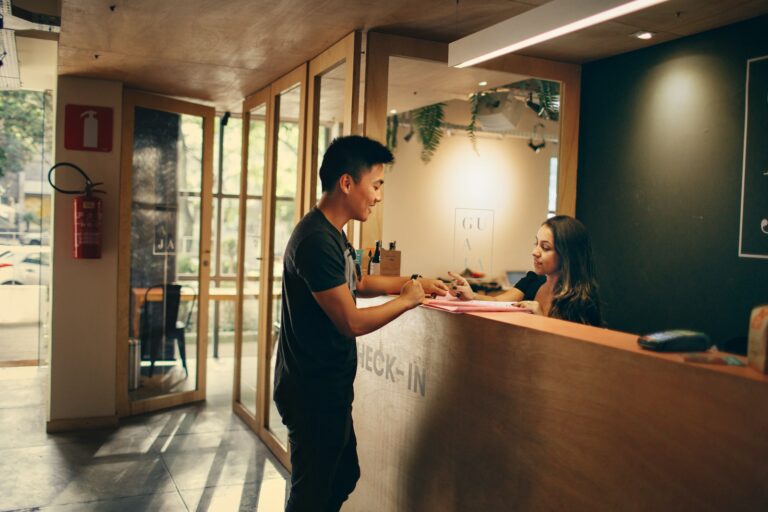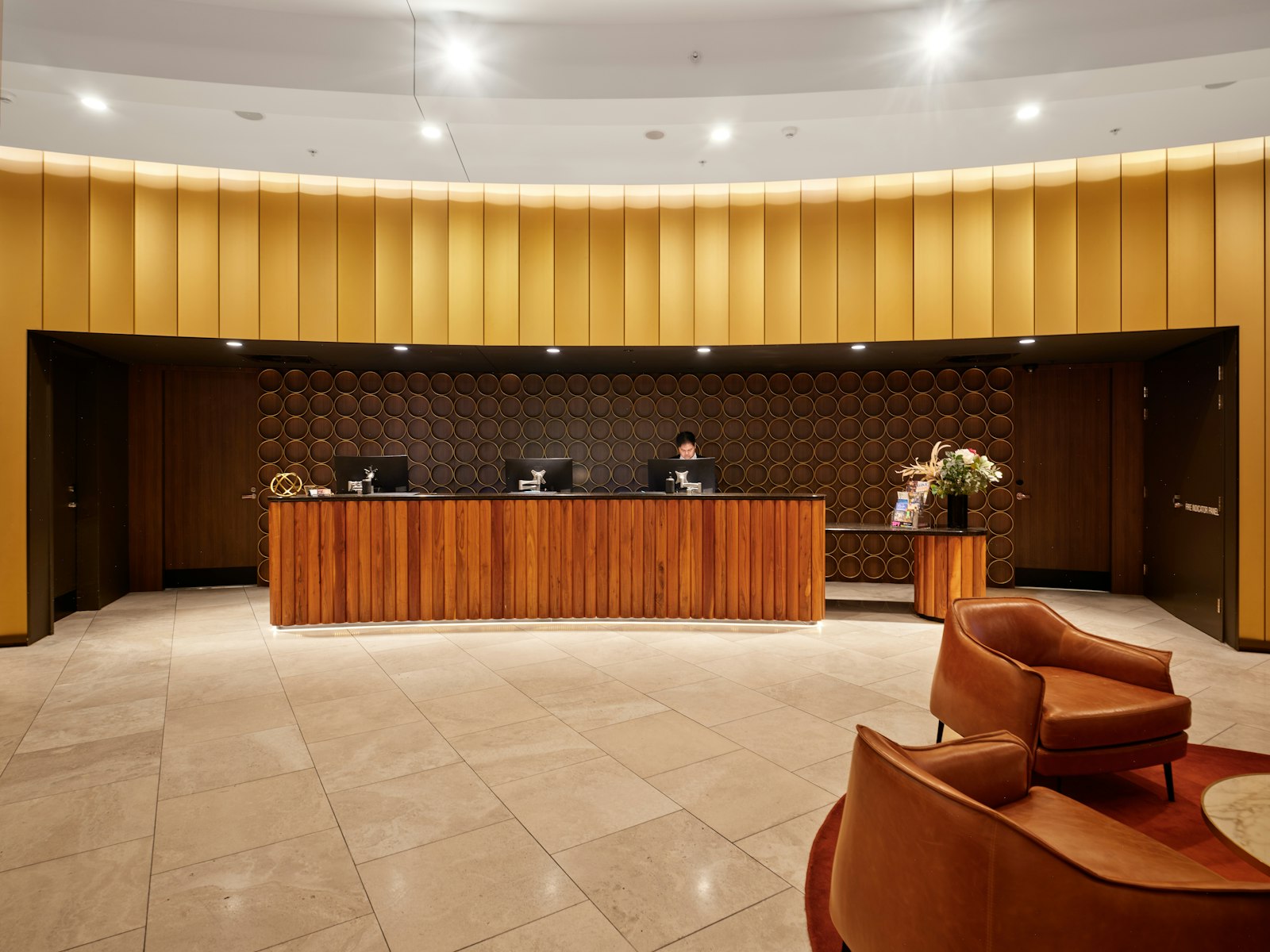
A hotel mock-up room review has a different job from a design presentation. The presentation explains the room the team intends to build. The review asks whether guests and staff can use that room as intended, with luggage on the floor, a meal on the table and tomorrow’s housekeeping task still to come.
A chair can look right in a photograph yet compete with the place a guest needs for an open suitcase. A generous desk can become the only surface available for both work and dinner. Neither observation automatically condemns the design. Both deserve a decision before the sample becomes a bulk order.
The useful outcome of a hotel mock-up room review is a record of tested tasks, unresolved questions and agreed changes. A collection of approving photographs cannot do that work on its own.
Give the room a working brief
Start the hotel mock-up room review with the intended guest and operating model. A short-stay business room, a family room and a resort suite can place different demands on the same piece of furniture. Specify the activities the sample must accommodate instead of treating every possible activity as equally important.
The RIBA Plan of Work separates briefing, design and use within a staged project framework. For a hotel team, that is a useful reason to connect the sample back to the brief rather than approve it on appearance alone. The seven tests below are an editorial operating framework, not a RIBA checklist.
Invite people who perform the work: a housekeeping representative, an in-room dining colleague where relevant, a maintenance representative and someone responsible for the guest experience. Give each person a task to demonstrate. Technical acceptance, building requirements and specialist assessments remain with the appointed professionals.
Keep hotel mock-up room review conditions visible
Write down what the sample includes before the walkthrough starts. A missing mirror, a temporary chair or an unfinished control label can affect an observation. Mark those limits in the hotel mock-up room review so an unfinished detail is neither quietly approved nor mistaken for the intended final design.
Use comparable conditions when revisiting a disputed decision. If the first dining test included an open suitcase and the second removed it, the team has changed more than the table. Repeating the task with the same ordinary belongings makes the discussion easier to follow, without pretending it is a laboratory performance study.
Keep preferences separate from task evidence. A colleague may dislike a finish while finding the room easy to use; another may admire it while identifying a difficult reset sequence. Both views can be recorded, but they answer different questions. A hotel mock-up room review becomes more useful when the approval record preserves that distinction.
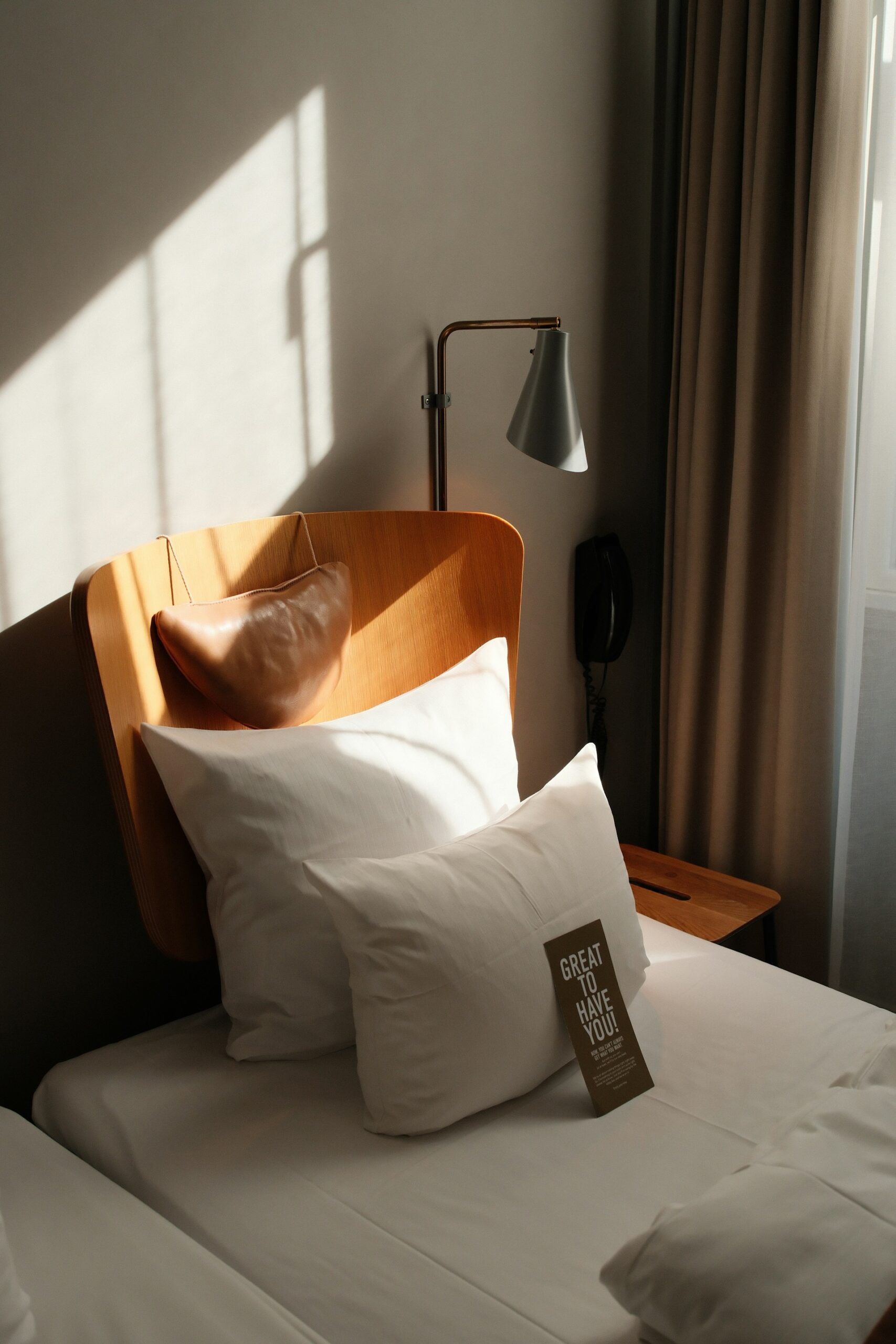
1. Arrival: where does everything go?
Begin outside the door with ordinary travel belongings. Walk in, put down a bag, remove a coat and decide where a suitcase will remain while it is open. Observe what the guest has to move before the room becomes usable.
The hotel mock-up room review should distinguish an occasional inconvenience from a conflict built into the layout. If the only luggage position occupies the intended working area, the design team needs to know which activity takes priority. Moving the bag for the photograph merely conceals the question.
Record the activity and the competing surfaces. “Nowhere convenient to unpack” gives the team less to investigate than “an open suitcase occupies the chair needed at the desk.” Avoid prescribing a technical solution before the designer has assessed the alternatives.
2. Bedside use: can the guest understand the choices?
Use the room from the bed as well as from the doorway. Read the labels, identify the available lighting choices and find a place for a phone, book and water glass. Ask someone unfamiliar with the concept to explain what they expect each guest-facing control to do.
This part of the hotel mock-up room review is about comprehension and ordinary use. A control can be easy to demonstrate during a tour yet difficult to interpret without the demonstrator. Note the explanation the person needed, rather than dismissing uncertainty as unfamiliarity.
Where guests have different preferences, discuss how the room communicates those choices. Do not turn the exercise into an electrical investigation or declare that one successful demonstration proves inclusive usability for everyone. Bring specific observations back to the relevant design specialists.

3. Work and dining: are shared surfaces genuinely workable?
Set out a laptop and a notebook, then introduce a room-service tray or another realistic meal arrangement. The question is not whether both can be squeezed onto a surface. It is what the guest must clear, relocate or leave unfinished.
A hotel mock-up room review can expose a trade-off without demanding more furniture. A moveable table, a different service presentation or a clearer distinction between working and dining space may be options for the team to consider. Each has implications for storage, appearance and staff tasks.
Compare those implications openly. A new table that solves the meal problem but has no sensible resting position creates another operating question. Retest the complete sequence, including returning the room to its normal arrangement.
4. Housekeeping: can the intended room be restored?
Ask housekeeping to describe and demonstrate the usual room-reset sequence using the sample arrangement. Watch what must be relocated, where supplies would be placed and which decorative items need individual attention. Keep the exercise within the property’s established working procedures.
In the hotel mock-up room review, a useful observation names the task. “This looks difficult to maintain” is an opinion. “The bedside display must be dismantled to reach the working surface” identifies something the team can discuss.
Collect the suppliers’ care information and ask who will keep it available after opening. This is not a reason to improvise cleaning methods on the sample. It is a chance to discover whether the proposed finish and the hotel’s intended care process have been considered together.
5. Service: does the guest-facing sequence join up?
Follow a service interaction from request to completion. For in-room dining, that could mean identifying the delivery surface, presenting the order and explaining how collection will be requested. For another property, the more relevant task may be an extra-linen request or a luggage delivery.
Nielsen Norman Group’s service-blueprint framework connects customer actions, visible staff activity, backstage work and supporting evidence. Apply that distinction to the room: an attractive guest-facing moment can still depend on an unresolved staff handoff.
The hotel mock-up room review should therefore include the return journey. Who hears the collection request? What identifies the room and the requested action? The furniture review need not select a software system, but the physical arrangement should not assume a service process nobody owns.
6. Ongoing care: what information will operators inherit?
Look beyond the first delivery. Ask where the item’s model reference, supplier contact, care instructions and replacement information will be recorded. A room can be approved visually while the information needed to look after it remains scattered across email attachments.
Use the hotel mock-up room review to identify that gap early. The maintenance representative can flag questions about access, replacement and specialist support for the appropriate team to resolve. The walkthrough does not authorize staff to dismantle equipment or substitute components.
The RIBA Plan for Use guide puts attention on intended outcomes and the transition into operation. That supports keeping operating information in the approval conversation, rather than leaving it until the room is already in service.
7. Repeatability: which version is being approved?
Label the sample items and connect them to the current specification references. Identify temporary props, unfinished work and products that are standing in for the proposed final item. Otherwise, different attendees may approve different versions of the same room without realizing it.
Close the hotel mock-up room review with an issue register, not a collective memory. Give each observation a reference, a responsible reviewer, a decision status and a description of the evidence needed to close it. Separate an accepted item from an item accepted subject to a specific revision.
Retain photographs as evidence of the approved arrangement, with enough context to explain what they show. A photograph alone cannot establish that a later product substitution has the same characteristics. The responsible team still needs to assess the proposed change.
A hotel mock-up room review example: the desk that also serves dinner
Consider an illustrative review exercise, not a reported hotel case. The sample room has a desk, a chair and a luggage bench. During the work task, the reviewer uses the desk for a laptop and notebook. During the dining task, the service colleague discovers that the tray needs the same surface.
In the hotel mock-up room review, write the issue as a conflict between activities. Do not record “buy another table” as though the solution has already been approved. The team can compare a moveable surface, a different service arrangement or a revised furniture configuration against the room brief.
Read the entries using these labels: Record and Illustrative entry.
- Observed task: Guest changes from desk work to in-room dining.
- Conflict: Meal setup requires the occupied working surface.
- Decision needed: Agree how the intended room supports both activities.
- Reviewers: Design, operations and in-room dining representatives.
- Closure evidence: Repeat both tasks using the proposed final arrangement.
The example shows why a hotel mock-up room review needs more than one departmental perspective. A change that looks convenient during dining must still work when the guest returns to the laptop, housekeeping restores the room and the furniture needs care.
Keep the hotel mock-up room review useful after the meeting
Finish by separating decisions that are closed, decisions awaiting evidence and matters outside the review’s scope. Return unresolved observations to the named reviewer. If a change alters another activity, bring that activity back into the test rather than closing the issue through correspondence alone.
The wider principles of designing for the guest experience help define the brief. The practical discussion of hotel interiors and operational efficiency provides related context. The sample-room exercise makes those intentions concrete enough to question.
A hotel mock-up room review earns its place when the eventual approval explains what was tested, what remains open and which arrangement the team agreed to repeat. That is a more useful record than a room everybody liked but nobody actually tried to operate.
Lead image: Neon Wang / Unsplash.