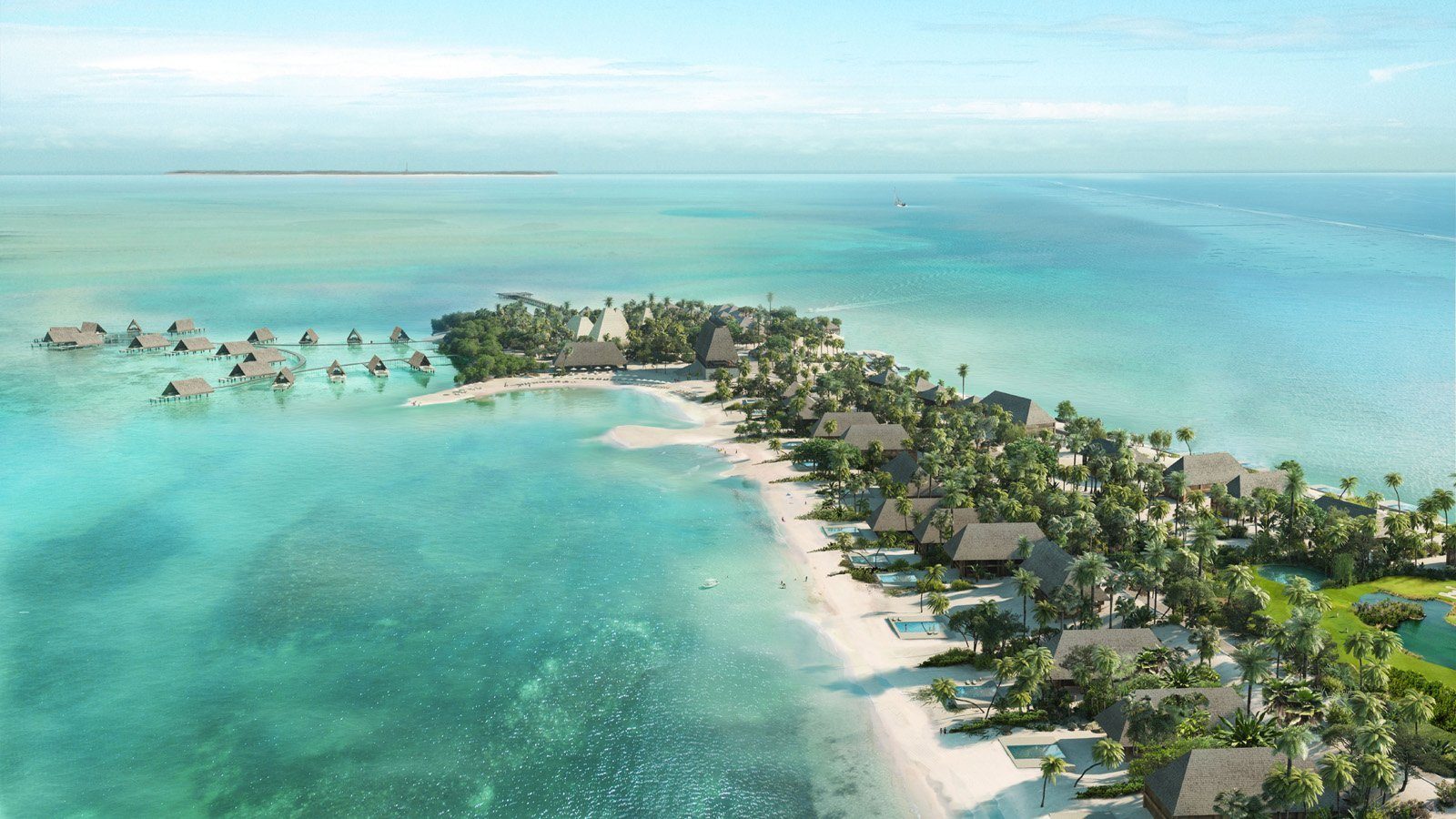
At Caye Chapel, the view is part of the business proposition. The planned Four Seasons resort sits on a private island off Belize, beside the Belize Barrier Reef. Four Seasons now lists the resort and residences among its 2027 openings. The developer describes 104 oceanfront rooms, including overwater bungalows, alongside homes, dining, wellness and a private club community.
For hospitality owners and operators, the interest extends beyond an attractive new address. Our reading of the project is that it brings three different relationships with a destination together: the short-stay guest, the homeowner and the returning club member. Making those relationships work side by side will be as important as the architecture.
A resort with several front doors
The developer’s current resort description combines the room inventory with a beach club, restaurants and bars, and a spa designed around a pool inspired by a cenote. Four Seasons’ residential page identifies HKS as architect and AvroKo as interior designer. These are announced project details; the renderings illustrate a proposed destination rather than a completed hotel.
The distinction matters when comparing Caye Chapel with a conventional resort. Guests may arrive through a hotel reservation, while homeowners have an ongoing connection to the property. The hotel becomes both a place to stay and part of the service infrastructure for a wider residential community. Each audience needs a clear understanding of what is included, what is shared and what remains private.
The longer relationship is with the owner
Caye Chapel’s real-estate material offers estate homesites, Four Seasons Private Estates and Private Residences. It also describes an optional rental programme under which Four Seasons would promote, manage and service participating homes. The proposition links the convenience of a serviced home with access to resort amenities.
Our analysis is that this combination asks more of an operator than selling rooms alone. A returning owner expects continuity: a home cared for between visits, familiar service and reliable access to facilities. A paying hotel guest expects the advertised experience to be available during a short stay. Inventory, housekeeping and amenity access therefore need to work as one coherent system, even where the underlying ownership differs.
Nature needs an operating plan
Conservation has been part of the project’s public narrative from its early announcements. Four Seasons’ 2018 release described plans for a Fabien Cousteau nature and conservation institute, including education and research activities. More recently, Wincwire reported that structural development was intended to occupy only 10% of the island, citing other industry reporting.
That percentage should be read as a reported plan, not as an independently measured environmental outcome. For THD, the useful question is how a nature-led promise becomes measurable: what is protected, who maintains it, how guests use sensitive areas and how progress is reported. A small building footprint alone cannot answer questions about energy, water, waste or marine activity. Those operating details will determine how convincing the conservation story becomes.
The experience begins before check-in
The developer describes transfers from Belize City of less than ten minutes by air or around thirty minutes by private boat. Its experience programme spans golf, water activities, dining and wellness. For an island destination, those elements make the journey and the itinerary part of the product, not just optional additions to the room.
The operating questions follow naturally. How are transfers coordinated with international arrivals? Which activities need advance booking? How do teams manage weather-related changes without leaving guests with an empty day? These are questions raised by the concept, not reported shortcomings. They explain why staffing, scheduling and service recovery deserve as much attention as the dramatic arrival photograph.
Now watch the delivery
The current Four Seasons listing provides a 2027 opening year, but not a specific opening day. The developer also says amenities and imagery reflect proposed plans and remain subject to change. Readers tracking supply should keep that planned opening separate from a confirmed launch or bookable inventory.
The next useful evidence will be concrete: an opening announcement, the final accommodation mix, published guest experiences and an explanation of how the environmental commitments will be delivered. Caye Chapel offers a strong proposition on paper. The business story will be how consistently the finished destination fulfils it.
What to watch next
- A specific opening announcement and the start of hotel reservations.
- The final room and residential mix, with clear access to shared amenities.
- Published delivery measures for conservation and island operations.