Wildflower Hall, the luxury mountain hotel near Shimla, is back in the news after Himachal Pradesh announced a bid of 47.1% of annual gross revenue for its next operating licence. Reports published on 31 October identify the Oberoi Group’s EIH as the continuing operator under an arrangement described as lasting 35 years.
The story is bigger than a new hotel contract. It concerns a historic estate, a hotel rebuilt after fire, a joint venture that ended in a long legal dispute, and a government separating ownership of a valuable property from the business of running it.
Status checked on 1 November 2026: the latest public auction notice reviewed by THD schedules expiry of the right-of-first-refusal period and announcement of the preferred bidder for 11 November 2026. An earlier exercise or waiver may be possible, but we have not located a separate final award or executed new licence. The announced bid, reported operator and completed contract should therefore be read as distinct stages. The official timetable is available here.
What is Wildflower Hall?
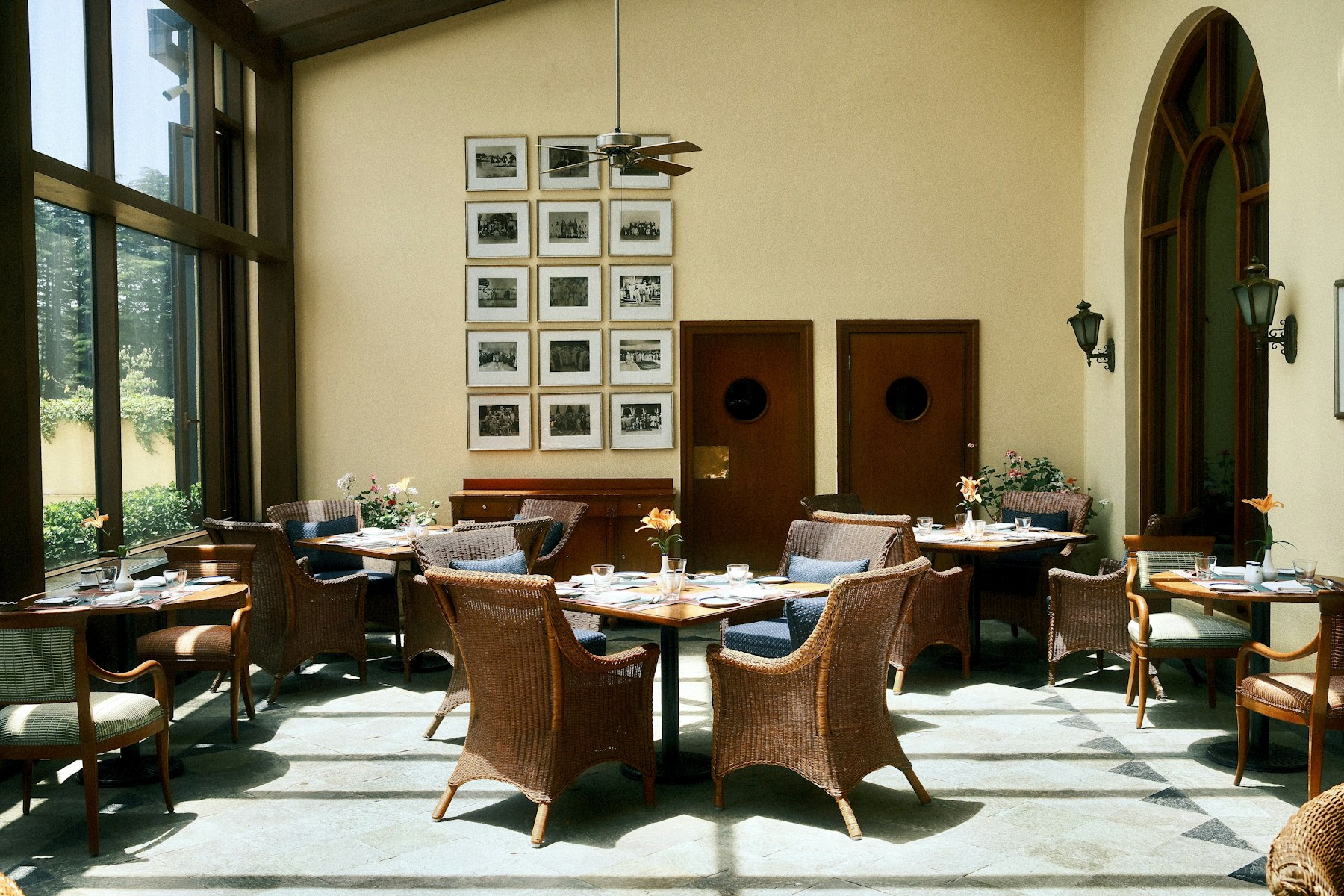
Wildflower Hall is an 85-room resort at Chharabra, near Shimla in the Indian state of Himachal Pradesh. It occupies a wooded mountain setting associated with the Oberoi name and the luxury hotel market.
Its documented hotel landholding is 77,471 square metres—about 7.75 hectares, according to Mashobra Resort Limited’s audited accounts. The landholding and the surrounding forest landscape are different measurements; describing the hotel estate as 100 hectares obscures that distinction.
EIH Limited is the listed Oberoi Group hotel company, often called East India Hotels in older coverage. Mashobra Resort Limited, or MRL, was the joint-venture company through which the Wildflower Hall property was developed and operated. These names matter because ownership of the company, ownership of the property and appointment of the hotel operator have changed through separate steps.
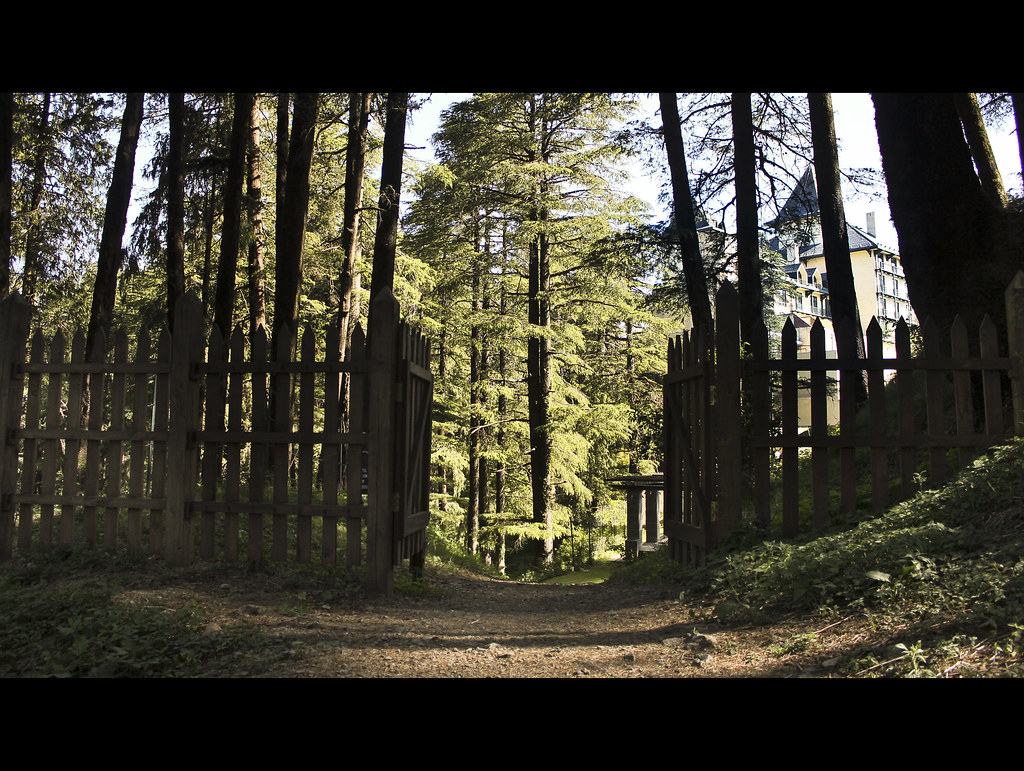
A historic estate, followed by a modern reconstruction
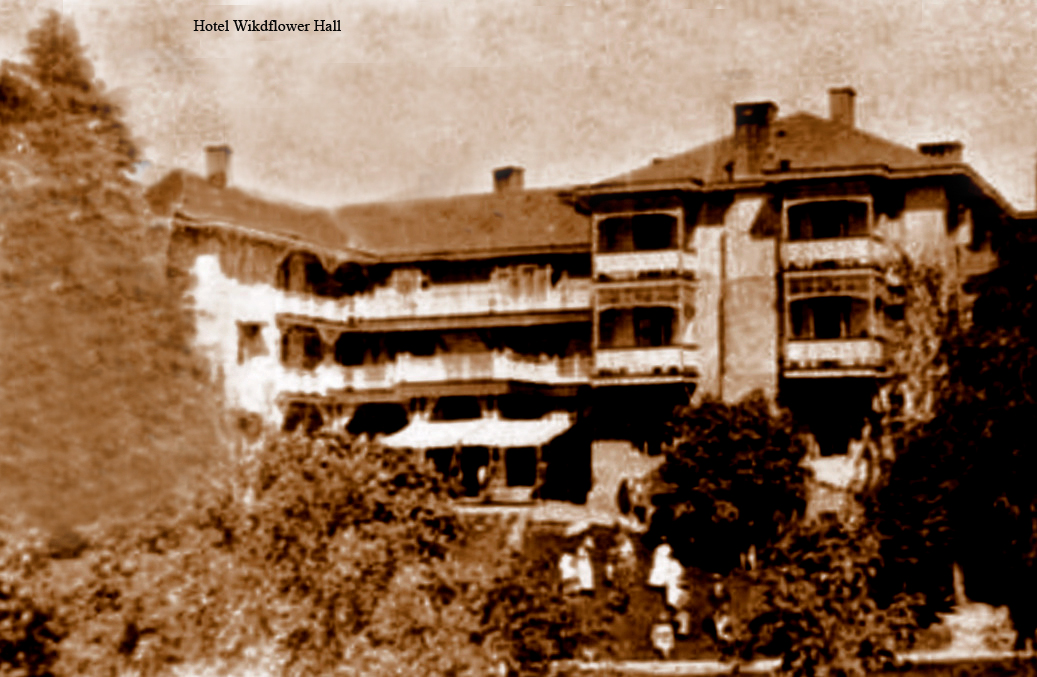
The Wildflower Hall name predates the present resort. The estate is associated with Lord Kitchener, the British army commander in India, and with the hill-station world around colonial Shimla. The earlier hotel later came into public tourism ownership.
Early accounts do not agree neatly on every construction date. Popular histories repeat a 1902 origin and a later 1925 hotel rebuilding; a hotel-family recollection published by the Himalayan Club describes a different sequence, including a hotel commissioned in 1911. Those accounts do not establish that today’s resort is an unchanged building from 1902.
The decisive break in the property’s modern story was the 1993 fire. The older hotel was destroyed, and redevelopment followed through a partnership between Himachal Pradesh and the Oberoi business. The present hotel should be understood as a later reconstruction on a historic estate. The archival image above shows the earlier building; the 2012 photograph shows the modern resort.
1995–1997: how the state and Oberoi became partners
The state and EIH entered their joint-venture agreement on 30 October 1995. In this joint venture, the public authority and the private hotel business shared a corporate vehicle rather than simply agreeing a conventional room-management contract.
The land was conveyed to MRL on 6 February 1997 as the state’s contribution to that structure. The partners subsequently fell into dispute over their agreement. This older arrangement explains why the later litigation involved the hotel property, company shares, financial assets and contractual payments—not just the name over the entrance.
It also explains a distinction that is easily lost in the latest headlines: the new 47.1% figure is a revenue-sharing bid. It is not a proposed percentage ownership stake in the land or hotel.
2002–2026: the long route from dispute to state control
The termination notice belongs to March 2002, not 2022. An arbitral award followed on 23 July 2005. Arbitration is a legal process for deciding a contractual dispute; the award determined the parties’ obligations.
The award provided a route under which the property could continue on a leasehold basis subject to obligations. EIH and MRL challenged it. The court proceedings over those challenges culminated in October 2022, after which enforcement and possession questions continued.
On 20 February 2024, the Supreme Court upheld the handover direction but allowed EIH to retain possession and management until 31 March 2025. EIH’s exchange disclosures record the hotel’s possession being handed to the state on 31 March 2025. That handover caused EIH to lose control over MRL.
The corporate settlement continued after physical possession changed. In its August 2026 financial filing, EIH records the subsequent transfer of its MRL shares to the state after compensation, and says the High Court closed the execution proceedings on 5 January 2026. The next operating licence is a separate commercial chapter after that ownership and enforcement process.
Why Oberoi could keep operating a state-owned hotel
The 2025 handover did not require the state to become the day-to-day hotel operator. In an exchange filing dated 2 April 2025, EIH said the government had appointed it to provide interim operation and maintenance/management services from 6 p.m. on 1 April, while an operator was selected through competitive bidding.
That appointment was intended to maintain continuity for guests and hotel operations. A property can consequently remain publicly owned while a private company supplies its brand, staff, distribution and management. Keeping the operator in place does not itself transfer ownership back to that operator.
What the new auction has established—and what remains to follow
The Tourism and Civil Aviation Department invited bids for operation, management and maintenance, often shortened to OMM. The auction concerned licence rights to run the hotel while the public owner retained the underlying asset.
The government’s late-October announcement, reported by ANI and other news organisations, gives the headline bid as 47.1% of gross revenue. The Tribune’s reporting names EIH as the continuing operator.
The published process nevertheless has more than one milestone. Corrigendum 09, dated 22 October, scheduled the e-auction for 28 October and the right-of-first-refusal expiry/preferred-bidder announcement for 11 November. Under this tender, the right of first refusal gives EIH a conditional opportunity to secure the licence through an enhanced offer under specified rules; it is not ownership of the hotel.
The arrangement is being described publicly as 35 years. June reporting of the tender described a 30-year initial term with a possible five-year extension. THD has not verified the complete final deed or the extension conditions, so a possible extension should not be presented as an automatic entitlement. Nor does an auction announcement, by itself, establish an effective date or an expiry date for the eventual licence.
How the money works
Revenue is different from profit. If ₹100 falls within the contract’s defined gross-revenue base, a 47.1% share represents ₹47.10. The remaining ₹52.90 is not the operator’s profit: wages, utilities, supplies, maintenance and other costs still have to be met. This is an illustration of the percentage, not a forecast of Wildflower Hall’s accounts.
The model includes a payment floor. Clause 9.2 of the public model uses the higher of the revenue-share amount and a minimum guarantee. The latter is a minimum contractual payment, rather than a payment that falls automatically with occupancy.
The upfront fee needs careful accounting. The public model specifies a non-refundable ₹24 crore upfront fee and clause 9.3 requires it to be adjusted in full against subsequent licence fees. Under that mechanism it is an advance against later fees; simply adding it again to lifetime licence receipts would double-count the amount. The executed deed remains the document to check for the final treatment.
Annual escalation is a separate term. Reports of the government announcement refer to a 3% annual increase. Model clause 9.4 deals with escalation of the minimum guarantee at a separately defined rate. The public model does not establish a yearly three-percentage-point rise in the 47.1% bid.
Investment is not a cash payment to the treasury. Corrigendum 06 amends the capital-work requirement to a minimum ₹50 crore within three years of the Effective Date, replacing the earlier two-year period. That is spending committed to the property under the bid framework, distinct from licence payments to its owner.
Reading the ₹2,000 crore headline
The government estimates approximately ₹3 crore a month and around ₹2,000 crore over the stated licence period. Those are projected future receipts. They are not money already collected, a sale price for the hotel or a valuation of the estate.
The approximately ₹400 crore of earlier cash receipts cited by the government is a separate historical figure. THD has not independently reconciled that aggregate to audited state accounts. Combining it with future licence revenue or with the capital-work commitment would obscure what each number measures.
For readers unfamiliar with the unit, one crore is ten million rupees: ₹2,000 crore is ₹20 billion. That conversion changes the unit, not the certainty or timing of the forecast.
Why this is a hospitality story
THD analysis: Wildflower Hall illustrates how the guest-facing continuity of a hotel can conceal a substantial change in the business underneath it. The same operator can remain visible while ownership, payment obligations and investment requirements change.
A high revenue share also makes the definition and auditing of revenue important. The operator has to cover costs from what remains, while the owner needs a reliable way to verify the contractual base. The headline percentage alone cannot tell a reader whether the hotel will be profitable or whether a particular room rate is sustainable.
The public owner’s challenge is broader than collecting a fee: it includes overseeing the property and enforcing the agreed investment and operating obligations. The operator’s challenge is to deliver the hotel product within those economics. The published bid is an important number, but it does not substitute for the operating agreement or the hotel’s actual accounts.
What to follow next
The next documents that can settle the new chapter are the preferred-bidder decision, the record of any right-of-first-refusal exercise, and the executed licence with its Effective Date, revenue definition, payment floor, escalation and extension provisions.
As of 1 November, the verified picture is a state-owned property, an incumbent operator that continued under an interim arrangement, and an announced 47.1% bid for the next licensing framework. That is a more useful starting point for understanding Wildflower Hall than treating every reported figure as a completed sale or every operating headline as a change of ownership.
Reporting note: this feature draws on the public bid documents and amendments, EIH/MRL corporate disclosures and contemporary reporting. It does not claim access to an executed new licence. Image and document credits are listed below.